





Every Indian property owner knows the feeling. The annual property tax notice arrives. Then the municipal charges. Then the maintenance levy. Then the capital gains bill comes into play when you eventually sell.
Owning property in India carries a consistent, multi-layered tax burden. So when Indian investors first hear that Dubai has no property tax, the natural reaction is scepticism. Is it really true? What is the catch?
This article answers both questions directly. Here is the complete, honest picture of property tax in Dubai for Indian investors in 2026, including what you pay, what you do not pay, and how the numbers compare to owning property in India.
Is There Property Tax in Dubai?
No. Dubai does not levy an annual property tax on residential or commercial property owners. This applies equally to UAE nationals and foreign investors, including Indian buyers.
Once you purchase a property and complete the one-time Dubai Land Department (DLD) registration, your annual holding cost on the asset is limited to service charges and maintenance. There is no recurring government tax on the property itself.
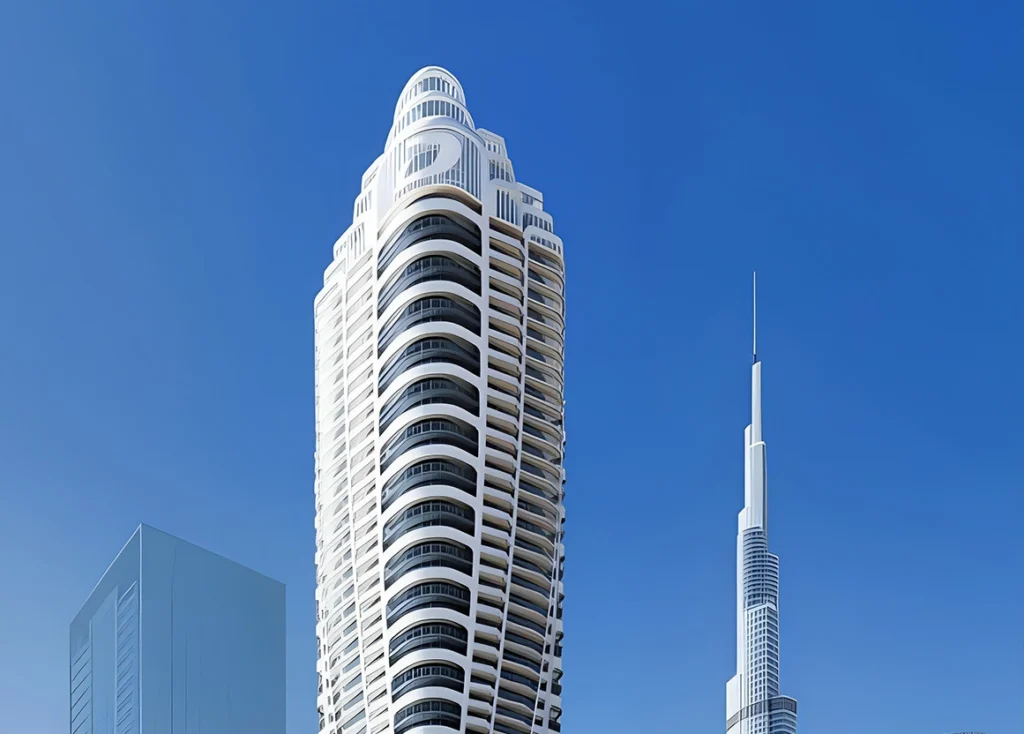
This is not a temporary incentive or a promotional offer. It is a structural feature of the UAE’s tax framework. The UAE does not impose income tax, capital gains tax, or annual property tax on individuals. This policy has been in place for decades and is a foundational part of Dubai’s appeal as a global investment destination.
What About the 4% DLD Fee?
The only significant government transaction cost associated with buying property in Dubai is the one-time DLD registration fee of 4% of the purchase price. This is paid once, at the time of registration, and never again.
To put this in context: a buyer purchasing an AED 800,000 apartment in Dubai pays AED 32,000 (approximately INR 7.52 lakh) in government fees at purchase. After that, there are zero annual property tax obligations for as long as you hold the asset.
Compare this to purchasing a comparable property in Mumbai, where stamp duty alone runs at 5 to 6% of the transaction value, registration charges add another 1%, and annual property tax continues indefinitely afterward.
The Full Dubai Tax Picture for Indian Investors
Understanding property tax in Dubai means understanding the entire tax environment, not just one line item. Here is the complete picture.
No Annual Property Tax
As covered above, Dubai levies no annual property tax. You do not pay a recurring government charge simply for owning the asset. This applies to both residential and commercial properties held by foreign investors.
No Tax on Rental Income in Dubai
Dubai imposes no income tax on rental earnings. If your Dubai apartment generates AED 60,000 per year in rent (approximately INR 14.1 lakh), you keep all of it minus property management fees. The UAE government does not take a share of your rental income.

This is a significant contrast to owning rental property in India, where rental income is added to your total income and taxed at your applicable income tax slab rate.
No Capital Gains Tax in Dubai
When you sell your Dubai property, the UAE levies no capital gains tax on the profit. If you purchased an apartment for AED 700,000 and sell it for AED 950,000 three years later, the AED 250,000 gain is entirely yours.
Dubai’s residential market has delivered strong price appreciation in recent years. According to Knight Frank’s Dubai Prime Residential Index, prime residential prices rose consistently between 2021 and 2025. Investors who captured this appreciation paid zero capital gains tax in Dubai on their profits.
No Wealth Tax or Inheritance Tax
The UAE does not impose wealth tax or inheritance tax. Your Dubai property passes to your heirs without a tax event in the UAE. This makes Dubai property particularly attractive for Indian investors who are thinking about long-term estate planning and inter-generational wealth transfer.
What Indian Investors Must Still Pay in India
Here is the important counterbalance that every honest advisor will tell you. Dubai’s zero tax environment applies within the UAE. Your obligations in India remain.
Rental income: You must declare Dubai rental income in your Indian income tax return under Schedule FA (Foreign Assets) and Schedule FSI (Foreign Source Income). The income is taxable in India at your applicable slab rate. However, the India-UAE Double Taxation Avoidance Agreement (DTAA) ensures you are not taxed twice. Since Dubai levies zero tax, the DTAA credit mechanism means your Indian tax liability on this income is reduced accordingly. A FEMA-qualified CA can structure this correctly.
Capital gains: When you sell your Dubai property, the capital gain must be declared in India. Long-term capital gains tax applies in India if you have held the property for more than 24 months. The DTAA may provide relief here as well, depending on how the gain is structured and declared.
Foreign asset declaration: You must declare the Dubai property under Schedule FA in your Indian ITR every year from the year of purchase. Non-disclosure of foreign assets carries serious penalties under India’s Black Money Act. This is non-negotiable compliance.
The net result is still significantly more tax-efficient than Indian domestic property ownership. But the India-side obligations are real and should be handled by a qualified professional.
Property Tax in Dubai vs. India: A Direct Comparison
This comparison is the clearest way to understand the financial advantage Dubai offers Indian property investors.
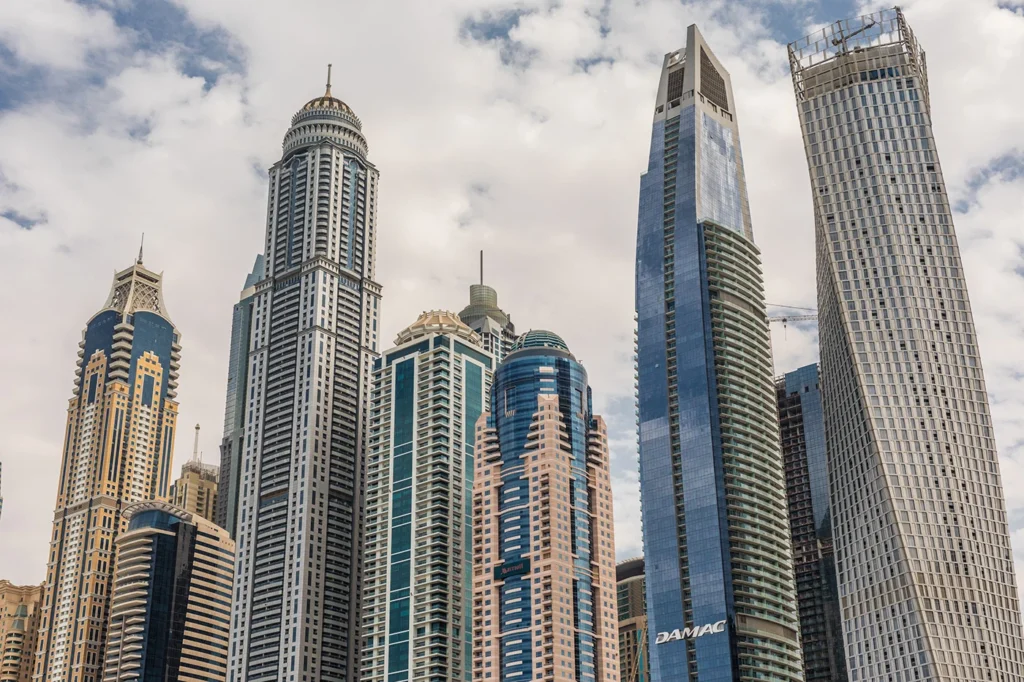
Buying a Comparable Property: Transaction Costs
Mumbai (INR 1.75 crore apartment):
- Stamp duty (6%): INR 10.5 lakh
- Registration charge (1%): INR 1.75 lakh
- GST on under-construction property (5%): INR 8.75 lakh
- Total transaction cost: approximately INR 21 lakh or 12% of the purchase price
Dubai (AED 750,000 apartment, approximately INR 1.76 crore):
- DLD registration fee (4%): AED 30,000 (approximately INR 7.05 lakh)
- No stamp duty
- No GST equivalent
- Total transaction cost: approximately INR 7 lakh or 4% of purchase price
Dubai’s transaction cost is roughly one-third of Mumbai’s on a comparable investment.
Annual Holding Costs
Mumbai property (INR 1.75 crore apartment):
- Annual property tax: INR 15,000 to INR 40,000, depending on zone
- Municipal charges: Variable
- Maintenance: INR 30,000 to INR 60,000 per year
- Total annual holding cost: INR 50,000 to INR 1 lakh or more
Dubai property (AED 750,000 apartment):
- Annual property tax: Zero
- Annual service charge: AED 8,000 to AED 15,000 (approximately INR 1.88 lakh to INR 3.53 lakh) depending on building size and grade
- Total annual holding cost: service charge only, no tax component
Note: Dubai’s service charges are higher than Indian maintenance fees in many cases. However, they cover building management, shared amenities, security, and common area maintenance to a significantly higher standard. And critically, there is no tax element within them.
Rental Income Tax Comparison
Mumbai rental income (INR 14 lakh per year at 2.5% yield on INR 5.6 crore property):
Wait, let us use comparable asset values. On an INR 1.75 crore Mumbai apartment at 2.5% yield: INR 4.4 lakh rental income per year. Taxed at your income slab rate (say 30%): INR 1.32 lakh paid to the government annually.
Dubai apartment (AED 750,000 at 9% yield): AED 67,500 rental income per year (approximately INR 15.9 lakh). Zero tax in Dubai. Indian DTAA filing required, but no double taxation.
The yield gap and the tax gap together produce a net income difference that compounds dramatically over a five to ten-year holding period.
Common Misconceptions About Property Tax in Dubai
Indian investors sometimes arrive at the Dubai Property Expo with assumptions that need clarifying. Here are the most common ones.

“There must be hidden taxes I am not seeing.”
There are no hidden property taxes in Dubai. The tax framework is transparent and well-documented by the UAE government. Service charges are the main recurring cost, and these are disclosed in full by every developer at the time of purchase. The DLD publishes all transaction fees publicly at dubailand.gov.ae.
“This will change soon — the UAE will introduce property tax eventually.”
The UAE introduced a 9% corporate tax in 2023, applying to businesses with profits above AED 375,000. This does not apply to individual property investors. The government has given no indication of plans to introduce an individual property tax or capital gains tax. The zero-tax framework for individual investors remains unchanged as of 2026.
“I will be taxed heavily in India on the Dubai income, so the advantage disappears.”
This is partially true but overstated. The DTAA between India and the UAE reduces your Indian tax liability on Dubai-sourced income. The net rental yield after Indian tax compliance is still significantly higher than domestic Indian rental returns. A FEMA-qualified CA can model this accurately for your specific income position.
Frequently Asked Questions
Is there really no property tax in Dubai for foreign investors?
Correct. Dubai levies no annual property tax on residential or commercial property, regardless of whether the owner is a UAE national or a foreign investor. The only government cost is the one-time 4% DLD registration fee at purchase.
Do I pay tax on rental income from my Dubai property?
Dubai imposes zero tax on rental income. However, you must declare the income in your Indian tax return under Schedule FSI. The India-UAE DTAA ensures you are not taxed twice, and a qualified CA can minimise your Indian liability on this income.
What happens to property taxes in Dubai if the UAE changes its laws?
The UAE’s individual investor tax framework has been stable for decades. The 2023 corporate tax introduction did not affect individual property investors. As of 2026, there is no announced plan to introduce a property tax or a capital gains tax for individuals in the UAE.
How does property tax in Dubai compare to buying property in the UK or Australia?
Dubai compares very favourably. The UK charges Stamp Duty Land Tax, annual council tax, and capital gains tax on property sales. Australia charges stamp duty, land tax in most states, and capital gains tax. Dubai charges only the one-time 4% DLD fee, with zero ongoing tax obligations.
Should I get professional advice before buying a Dubai property from India?
Yes, always. The Dubai-side tax picture is straightforward, but your Indian compliance obligations under FEMA, the Income Tax Act, and the Black Money Act require proper professional guidance. Attend the Dubai Property Expo to understand the investment, then work with a FEMA-qualified CA for your India-side structuring.
Ready to Invest in a Zero Property Tax Market? Start Here
The property tax in Dubai is clear. Zero annual tax, zero rental income tax in Dubai, zero capital gains tax on sale. One transparent 4% DLD fee at purchase and nothing more from the government after that.
For Indian investors who have spent years managing the full weight of India’s property tax structure, this environment changes the return calculation entirely.
The Dubai Property Expo in India is where you can see this advantage applied to real projects, real prices in Indian rupees, and real payment plans designed around LRS limits. You will meet verified developers from Emaar, DAMAC, Binghatti, Imtiaz, Ellington, and Omniyat — all in your city, all for free.
Register now at dubaipropertiesexpo.co.in and discover what zero property tax actually means for your investment returns.